Episode Transcript
[00:00:00] Speaker A: Welcome to American wealth in Franchising and Kim Daly tv. I am your host, Kim Daly. I want to educate, motivate and inspire your business ownership journey by interviewing business leaders, coaches and exceptional franchisees to learn their valuable insights and strategies that we can apply to our own business ownership dreams. Now onto the show.
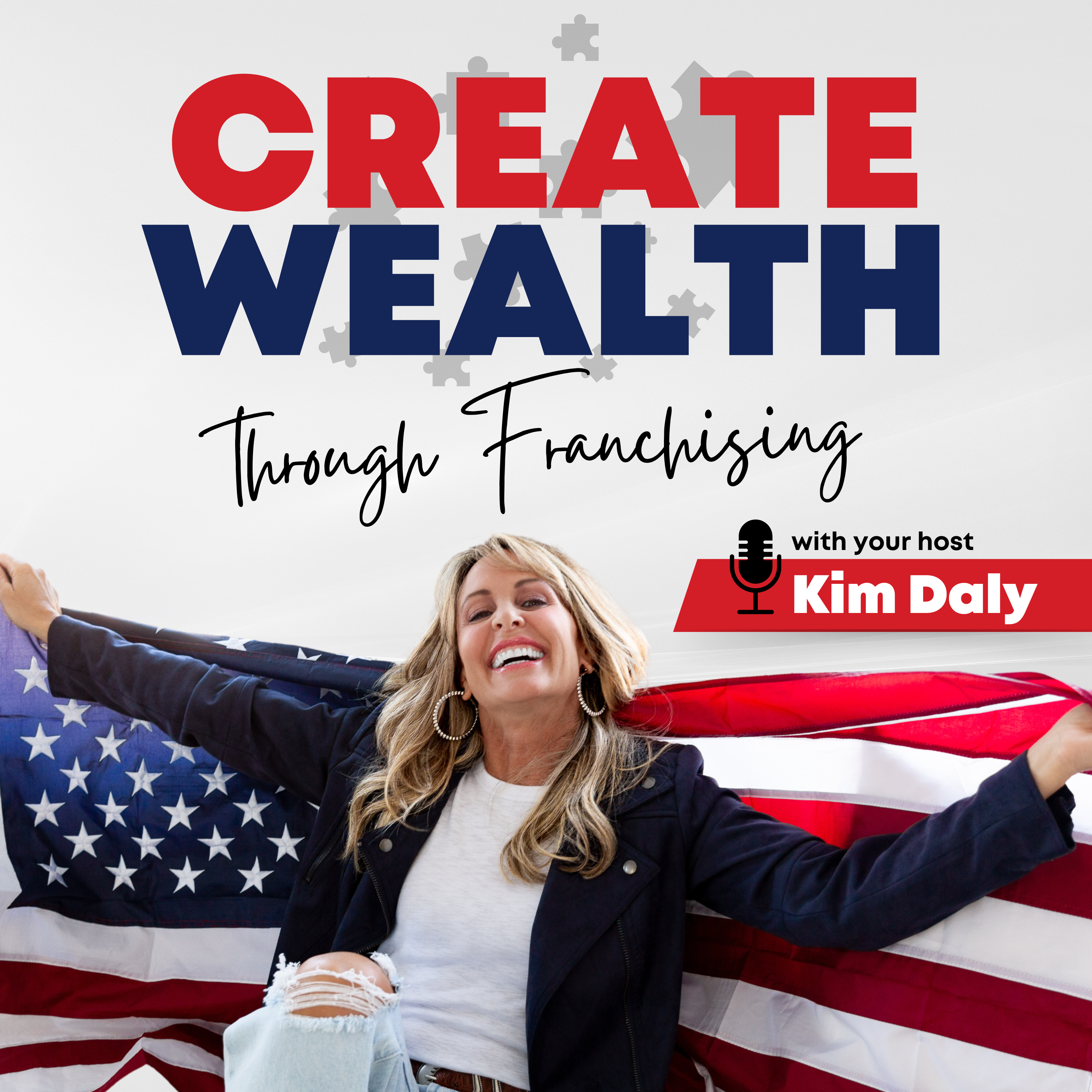
Welcome back to Create Wealth Through Franchising podcast and Kim Daily tv. In my studio today, another homecoming moment. You're going to meet Mike Jewett from Gaithersburg, Maryland. He was once just a candidate with Kim Daly and now he's a franchisee of not one, but two different franchises. So, Mike, welcome to the studio of Kim Daly tv.
[00:00:52] Speaker B: Thanks, Kim. Excited, excited to be here.
[00:00:54] Speaker A: Now, wait, is this a full, full circle moment? Did you find me through YouTube?
[00:00:59] Speaker B: I did so. Actually found you through a podcast.
It was the Airbnb kind of short term rental podcast with Avery Carl. I heard you on that and I think I called you the next day or emailed or reached out and yeah, I loved what you had to say. I had looked at a franchise before, before I even knew kind of what you do existed, and it wasn't a great experience. And then I kind of, a couple years passed, I didn't really think about it. Heard you on the podcast and I was like, oh, this person exists. So I'm going to reach out because they can help me.
[00:01:29] Speaker A: That's really good. So when you were looking at franchises on your own and it wasn't a positive experience, what was it about that that made it not positive?
[00:01:37] Speaker B: You know, I wasn't necessarily looking for a franchise. I had an idea of a business I wanted to start and just on my own. And I found out about this company who was doing it kind of, you know, across the nation. They were a franchise. I reached out, I went into, you know, the process a little bit with them, but know, just kind of a clunky experience. I didn't have anyone guiding me, didn't have anyone, you know, offering advice, kind of questions I should ask. And, you know, ultimately it didn't, it didn't work out. I didn't know that, you know, franchise consultants even was a thing back then. But then I heard you on the podcast and yeah, I was like, okay, this, this makes a lot of sense because it is a tough process to navigate on your own.
[00:02:11] Speaker A: That's so good. And maybe it did work out. It didn't work out that you became a franchisee, but maybe that saved you from losing a lot of money. Okay, so what was happening in your life when you You, I guess you were listening to an Airbnb show, so you were looking for an investment, but what else was happening in your life that was making you seek alternative ways to build cash flow?
[00:02:33] Speaker B: Yeah. So I'll remind a little bit. I've always been kind of interested in entrepreneurship and businesses. I think my first business when I was a teenager, I strung tennis rackets. So I was a tennis player. Everybody I knew was always breaking strings. Strings are expensive if you take it to a club.
And so I borrowed money from my dad, I bought a stringing machine, start stringd some other kind of small, like, teenager businesses along the way. Landscaping, handyman type work, but always been interested in that. And then I went to college, started my career in tech, and after about six years of that, I started a software company. And I ran that for six years. That was just, you know, my own thing. It wasn't franchise or anything like that. You know, during that six years that I ran that business, I just, you know, I started to think that I did not want to spend the rest of my career and in tech. And so I got out of that business and started looking for other opportunities, got into real estate a little bit. And then really. And I didn't start thinking about franchising until I heard you on the podcast. And I was like, this is another thing that I could do. I know what it takes to start a business from scratch, because I had done it before with the software company, and at this stage of my life, I didn't want to do it all myself like that again. And franchising was like, the perfect route for me.
[00:03:41] Speaker A: The easiest people to convince of the true value of a franchise are former entrepreneurs. Right. So starting a business from scratch is a one and done. Like, I've been there, done that, got the scars to prove it. Give me the plan and let me execute. I'll pay you the fees all day long, Right?
[00:03:56] Speaker B: Yeah, exactly. I mean, and I think with a good franchise, and you told me this early on, it's like, sure, you're always going to be paying royalties, but with a good franchise, a good brand, you'll get way more in return than you pay out in royalties. So I don't ever look at royalties as, like, something that, you know, I don't look at them begrudgingly. I look at them as, like, no, I'm. I'm basically outsourcing a lot of my business to somebody who knows how to do it really well. And I get that back in spades, you know, from the franchises I'm I'm with yep.
[00:04:22] Speaker A: So normally I ask this question toward the end, but I kind of want to ask it right now. Mike, if you follow me, you might know the question I'm about to ask. So I would venture to say, listening to your story up to this moment and getting into franchising, that you really are already unemployable by choice, I would say.
[00:04:41] Speaker B: So, yeah.
[00:04:41] Speaker A: So I'm writing a book, and it's called Unemployable and Financially Free. Right. And when I first say unemployable, like, people are like, wait, what? And I'm like, no, by choice. Like, this is a good thing, right? Where you're like, my time, my freedom is worth more than any salary could ever pay me, and I would rather figure it out on my own than go collect a paycheck. That's what I mean by being unemployable. Right. It's a mindset.
[00:05:03] Speaker B: Exactly. And I think, like, nowadays, I mean, this is accelerated a lot, you know, by something's going on, you know, like with AI and stuff. But if you work at a big company, I think, you know, the mindset is like, you know, if you work at a company, you have job security.
But I'm not so sure if that's true anymore, you know, especially the way things are going. You heard about layoffs across the board? You know, obviously, like, you know, in my area, we're close to D.C. so there's a lot of, you know, government layoffs and stuff. So job security. I don't think it's what it used to be. And I think it may get a little more precarious with, you know, AI getting involved. I've had friends and people I know who have already lost their jobs to the robots. You know, I. I just viewed as, like, look, you're going to work hard and you're going to spend your time and place your bed in something. And for me, you know, I'd rather bet on myself and invest in myself and take that chance as opposed to putting in someone else's hands.
[00:05:52] Speaker A: Okay, so you meet Kim Daly. We build this model. And I remember that you were very interested in fitness, but I also remember that I challenged you to explore other ideas. Like, I'm not just going to bring you four different fitness franchises. So take us back to when you were exploring. Exploring the different options, what you started to learn about yourself that may have been, like, different or unexpected than if you were out there on your own. Just because of the way that I might have been, like, stretching your mindset. Or challenge you to think outside of, like, your, you know, box.
[00:06:25] Speaker B: I think one thing that stands out, and I do love fitness, always been like a lifelong. Always had, you know, done all kinds of different workouts, played a lot of sports. I've always just. It's been a big part of my life. And so, you know, we did talk about in the beginning, but you encouraged me. You're like, look, this is. You may love fitness, you may not love it as a business, but let's look at a wide variety of businesses. And what I learned from that is it doesn't have to be something that you're passionate about by default. I think you learn if you like the business, you will become passionate about it. But, you know, you had me look at, you know, a variety of things, you know, from the, you know, salon studios and, you know, packing and storage and all different types of really interesting businesses and talking to those people. I did learn that, yeah, I could see myself doing a lot of this stuff. I think the reason why I ended up going with Alloy, probably the most memorable thing that you told me and the best piece of advice was it's all about the people. And, like, you were a million percent right on that. And that's ultimately why I invested in Alloy, the people behind Alloy, the brand, you know, Rick, Suzanne, Matt, Jared, like, if those people decided to start, like, a brand selling toilet paper tomorrow, like, I'd probably be on board with them. I just. I love working with them. I trust them. They have the best intentions and they work really hard to make franchisees successful.
[00:07:35] Speaker A: So it's so good and it's so true. It's the difference between entrepreneurship and franchisepreneurship. Right? You want to be out there on your own, on the jagged edge, making it up, being the inventor, working by yourself, being on an island, go be an entrepreneur. But if you want to bypass all of that hardship and struggle and find people who've already figured out how to make money, and you can buy into their belief and you can buy into their learning curve, and you can be humble and open yourself to their coaching, right? Then that's franchisepreneurship. And one of the best things about this particular franchisor is he's been in the business for, like, 30 years. So, like, people worry about, like, oh, fitness is, you know, it's fickle, it's cyclical. People get, you know, tired of it, and I'm like, well, then go partner yourself with a guy who's already been through all of the cycles, right? Who's seen people come and go, who knows what work and what doesn't work. So really, ultimately, when you look at this particular fitness franchise, like, it's led by a whole team that has been there, done that with all different seasons in fitness. And that's why there's a lot of fitness franchise was out there. And they're like, how do we earn a Kim daily lead? And I'm like, oh, unless you're Rick Mayo, you're probably not right, Because I just love the solidarity of what he's been through that made him who he is and what he can offer to these franchisees. As times do change and customers needs do change, he's already proven he can survive. He's going to survive the next 30 years, you know, so it's so true. And I love that. And I love that you say that's one of the most important things you took away from Kim Daly. I feel like, okay, he heard me. I did my job. That's the most important thing. And in selecting the right franchise is finding who, not what.
[00:09:15] Speaker B: And that's like, it sounds like, you know, logical now that we talk about it, but going into the process, I was thinking more about, like, what brands would I naturally be?
[00:09:23] Speaker A: What kind of workout do you want to do? Right.
[00:09:25] Speaker B: Yeah. You know, it just so happened that, you know, we ended up going with Alloy, and I do love fitness, so that was like, it was icing on the cake. But, you know, I did seriously consider other brands, you know, with you, and you probably remember the ones I'm talking about. And, you know, at the end of the day, it was, yeah, just came down to, I want to be in business with Rick and his team.
[00:09:40] Speaker A: I love it so much. For you, what happened after you invested in Alloy that then made you invest in that one Painter, which is your second franchise that you're now a part of. So what was happening that made you go, I think I need something else?
[00:09:54] Speaker B: Part of it was, you know, when I kind of set out and actually when I started talking to you, I think and, you know, fill out the, you know, kind of wrote up my goals and my vision, and I wanted kind of an overall company that had more or less like three legs, you know, real estate, which we had already been investing in and building that business. I wanted something, you know, ideally in fitness, even though, you know, I wasn't dead set on that. But I wanted fitness because I felt like it would be a durable business. It's something that I do understand. I thought, you know, I could do well with it if I found the right brand to go with not going to be taken over by AI or anything like that, it's, you know, people are still going to want real people, you know, training them. And then the third leg of that business I wanted was home services because for the similar reasons, I think it'll be a durable and resilient business over the next, you know, 5, 10, 20 years, even with advancements in technology.
And the way I landed on that one PA is I did a lot of research, just like I did, you know, with you, and, you know, found a brand that it was all about the people for me and I love what they were doing. So I added that to kind of complete that vision. And, you know, it was pretty soon after Alloy. So that was, you know, probably the timeline. I would have rather waited a little bit longer. But, you know, I also knew that, you know, with a emerging brand that's getting, you know, doing really well, the territories that I wanted may not be around for so long. So got started with that and that's gone really well too. So now I'm just, you know, I split my time between both. I have great teams on the pending business. I also have an operating partner. I work a lot, but it's worth it. I see the vision and as the businesses grow, you know, I'll get some of that time back that I'm putting right now.
[00:11:27] Speaker A: It's so good. And all this has happened in what, a two year period since you and I first worked together.
[00:11:32] Speaker B: The real estate business started earlier, but yeah, for franchising. I signed my papers with Aloha in November 23rd. We opened up in November 24th and we're about to hit our one year anniversary in about a week. So.
[00:11:43] Speaker A: Hey, Daily Coach fans, if you're ready to begin your own journey to find the perfect franchise, please email me right now at InquireimDaily TV. My services are totally free for you. That's InquireimDaily TV.
Now back to the show.
So a lot of times people will go through my process, get down to two and be like, oh, Kim, could I buy both? And I'm always like, no. Right? Like, no, you need to do one and then come back and do the other. And also, like, it's an indication to me that they're afraid of making the wrong decision. So that it's like a little bit of indecision in there. I think more than that, they're genuinely in love with two brands and I want to help you be a very confident firm. Decision maker. Because one of the most important qualities of a successful business owner is being able to make a committed decision making and not change it. Right? Because every day as a business owner, you're going to be forced to make decisions without all the information. And you have to learn to trust yourself and make the decision. You can't pause, you can't wait. You can't always have the luxury of time to measure all of the, you know, pros and cons.
So when people get to that place in the investigation and they're like, oh, I think I want to invest in two, I'm like, pick one, use validation. Go to meet the team day for the one that's slightly ahead and see if it will eke out and it can be one and, and then if not, we'll come back, we'll put that one to the side and we'll go to the other one. But please only start with one. And people may say, oh my gosh, Kim, you know, don't you make more money if I buy two? Well, sure I do, but like, I'm not in this just to make money, right? I want to help you do what feels right for you. And birthing two different businesses at the same time, it is a lot. Now I give Mike a lot of credit because he did it and he's doing it successfully, but he also was an entrepreneur before he came to this. So he had a self identity, right, that embodied ownership and he had the knowledge of how to build, you know, a sales based organization. Now what I thought you were going to say is, I bought that one because it's a lower investment, faster, you know, ramp up because it's transactional. While Alloy needs a physical brick and mortar, you got to find the location, you got to negotiate the lease, you got to wait for permits, you got to wait to consult, then you gotta wait to get membership. So brick and mortar has a much more, usually a longer ramp than a home service where it's kind of plug and play. So I know I didn't really ask a question in there, but I said a lot. So speak to what I'm saying. And in your experience, if somebody out there is like, oh, I'm on the verge of two different franchises. Knowing what you know now is the advice I give. Good advice or knowing what you know now, you'd still do it the same way.
[00:14:26] Speaker B: I'll just start by saying like, the advice you give is a hundred percent. Like, I would not recommend doing two at the same time. I did, but there's some caveats I want to add because I don't want to make it sound like it's easy. So first and foremost, like I'm working my tail off. Like it's seven days a week right now. It's, you know, usually my weeks are probably about 70 to 80 hours. It's nonstop. And that's because there's two businesses that I have to, to run. And I will also say that I do believe that, you know, if I was just doing one or the other business, I would be having faster growth now. The businesses have grown well, we're profitable. So I'm really happy. But you know, it didn't come easy. And you know, if it was just one, it would probably be even farther along. Right. So I want to throw that out there. You know, my reasons for doing it. I also had, you know, I saved up a lot of capital so that both businesses could be well funded. Because I think another thing you said early on is like two of the golden rules is like don't run out of money and don't quit. If you don't run out of money, you don't quit. You're going to succeed at some point. And you know, we were, you know, fortunate, you know, we'd made some good investments, we'd save a lot of money. And so I did have the capital. So it's not, you know, not a shoestring budget. We're not living, you know, paycheck to paycheck. So I need to throw that out there. And also the kind of the third part that made me comfortable with doing two at the same time is the team. Like I said, I have an operating partner for that one Painter. He's incredible. He works, you know, just as, just as hard as I do and that works really well. And on the alloy side, I don't have an operating partner per se, but I have an outstanding team with two full time employees. I'm a couple part timers. My wife also is involved and, and so there's just a lot of support there. And it's like you said, it's brick and mortar. So it's not like we're out in a truck every day hunting down new leads and doing estimate. It's a different business model and I think they complement each other pretty nicely in that way. Which one you have brick and mortar recurring revenue. The other one, you have a really high upside but you're always on the hunt and it's always going to be that way. Yeah. Not something, you know, taken on two at the same time. Not Something I would recommend. Unless you have, you know, kind of a special case lens, you feel like you're confident enough in yourself that you can pull it off and you're willing to put in the hours. Then I say, sure, it's possible, but it's definitely difficult. And trust me, there are some nights where I'm just like, dear God, what have I done? Because, you know, I worked like a 16 hour day and I have to be up at 6am the next morning to kick off a project. And we have, you know, maybe my, one of my trainers is out at Alloy and it's just, you know, you're looking at mirrored problems on top of, you know, a long week already and you're just like, lord. But those days pass and then you have a good day right after and you forget all about it.
[00:16:57] Speaker A: So, so I'm curious to know, like, okay, so you've called in all of this growth all at once, which is really amazing. I'm kind of the same person, Mike. Like when I ask for growth, it's always like everything grows at one time. And I find myself in these moments of like trying to spin all the plates and do it well and then it does pass you, right? It will settle down and then when it settles down, you're like, I don't know what to do with myself. Right, because you're so in the used to the doing that when it just comes to being and letting it all like be, it's like hard to just be still, right? It feels like a void. Which is totally crazy because we're not here to struggle. We're not here to like create more work for ourselves. We're trying to get to a goal and that's my question for you. So in calling all of this in, what is your ultimate goal?
[00:17:36] Speaker B: Going back to that vision of like kind of the three legged business that I want to build, you know, I wanted, you know, real estate's kind of I viewed as a foundation. It's great for wealth building. It's, you know, not exactly a great way to replace like income for your daily life in the short term. Right. It's very difficult to do that. So real estate's kind of the long term play I view as a foundation of the business and something that ultimately chances are, you know, that's something that we would pass on to our children one day. Whereas the businesses, you know, it's going to be much more of an active investment. You're going to be in the business and working on it every day. Faster growth, more revenue you know, your income starts to get replaced. And so, yeah, one of those three legs. I wanted that kind of diversification. And I also wanted businesses that I thought would be durable as we go through these, you know, changes over the next five years, which, you know, I keep bringing it up. I don't want to sound like a AI alarmist, but I did spend a lot of my career in tech. I am aware of it. I see it myself. Friends losing jobs, you know, companies doing mass layoffs, how it ends, who knows. But, you know, I'm almost 48 now. I still have a long, long Runway of my career left. And I don't want to be in my mid-50s worrying about my job or getting laid off because I'm being replaced. I want something that I'm in control of in an industry that I think is going to be more resilient to. To technology changes.
[00:18:51] Speaker A: I love that. And so ultimately, your goal is wealth creation, maybe legacy creation?
[00:18:56] Speaker B: Yeah, for sure. You know, a big part of this, too. You know, I have two teenage daughters. You know, we obviously like most parents, we want to, you know, leave something for them. I would rather not just leave them money with no responsibility. I would rather leave them with some business or real estate to, you know, where it does give them money, but also responsibility. And I want to show them that they can chart their own path. You know, they don't have to go to a 9 to 5 job after college. They can write their own story if they want. And, you know, my wife and I are kind of showing that to them by doing. And I think I can tell it's making an impact. And they are involved. You know, the girls, they get out, they do events with us. You know, they're at the gym. Maybe my teenager might get her certification, start training in their near future.
[00:19:34] Speaker A: Of course you're changing their life. Mike. I've said this before, like, our kids don't do what we tell them to do. That's why we're so aggravated all the time. They just do what they see us do. So the greatest example, the greatest role model you could ever be, if you're trying to leave a legacy for your kids, is there to pursue your own dream of business ownership and let them watch you. Because there's some statistic out there that children of entrepreneurs become entrepreneurs at like an alarming rate, right? It's true of me. My dad was an entrepreneur. I'm an entrepreneur. Like, I'm the. My parents laugh when I told them. At 40 years old, I remember saying to my dad, you know what? I think I'm completely unemployable. He nearly busted a gut, laughing so hard, he's like, kimberly, you've been unemployable since the time you were 2 years old. I guess I was born to be, like, you know, on my own. But now my kids, it's the perpetuation. Like, my two boys are going to college to be, you know, study business, get some basic skill, but they want to open franchises with Mom. They want to live the life that they've seen me give to them. They want to. They want that life. So that's the perpetuation. It's an even bigger deal than, like, okay, I want to, you know, get out of this illusion of security and build peace of mind and financial security for myself. But then you see, like, the trickle effect, the ripple of you daring to do that and how it impacts your family. And then, like, the people that you create jobs for and you get to be the boss of. And they're looking at you thinking, how do I get to be like you one day? Right? I mean, the ripple effect is so large because one person dares to follow their dreams. It's amazing.
[00:21:02] Speaker B: Yeah, 100%. So that's, you know, it's a great. You know, if you want to call it a byproduct of this whole crazy process, that's great. But it's an important one and something I think about, you know, a lot on my rough days, too, when we just had nothing but. But issues come up and I think about, you know, okay, well, got a show, you know, can't come home and just throw a tantrum or be overly frustrated. You got to, like, address the problems head on, acknowledge them, and work to the solution. And. And the girls see that, you know, they know when I have a tough day where, you know, we talk about dinner or whatever, I tell them what's happening, and sometimes they'll. They'll help me kind of talk through, like, well, what can we do about this? And.
[00:21:33] Speaker A: Amazing. Imagine the conversation, though, if the tough day was, hey, I lost my job, and you get a severance that ends, you know, in a couple of months, and you have bills that go beyond the couple of months. Right? So choose your hard. Right.
[00:21:45] Speaker B: Sometimes I think, like, the kind of the purpose of life is just hard work. So it's always going to be hard. It's just like, yeah, you choose it. You know, are you going to put your trust in someone else or. Or yourself?
[00:21:55] Speaker A: So now that you wind this down, now that you've been an entrepreneur and now you're being a franchisepreneur? What advice do you have for the person who may be a follower of Kim Daly who's thinking about owning a business but is not yet owning it? Maybe stuck behind their own limitations or stuck behind their own. I don't know if I'm qualified. I don't know if I want to work as hard as this guy or what advice do you have for that person who right now is on the sideline?
[00:22:17] Speaker B: First of all, you know, going through the process with you is a great kind of lead into being in a franchise because you have a very, like, structured and proven process of, like, how to get brands in front of people, how to evaluate them, what to ask, things like that. And if you can't follow the process that Kim Daly's laid out, like, you're going to have a hard time following the process that your brand that you eventually select. So, you know, that would be the first thing if you find yourself wanting to go, like, you know, to not listen to you or to do your own thing or ask, you know, whatever, maybe think about that and how you're going to act with the franchise brand that you've invested in that's telling you this is the. The playbook and whether or not you'll be able to follow that. So that's the first thing, like, make sure you can follow Kim Daly's playbook. That's a great sign that you probably be able to follow the franchise playbook. On top of that, you know, I think you really have to have confidence in what I would just kind of summarize as. As grit and resilience. Like, you have to have the grit to just, like, get out there every day, even when you're feeling sick or not up to it, and just follow the plays. Treat your team well, treat your customers well, put on a smile. Even if you're having a crappy day, you gotta have that. That grit. And then you gotta be resilient because you're gonna have bad days. And, you know, I've heard other people on your podcast talk about this, too. It's like, sometimes it comes up when you ask them, like, would you do it again? And, you know, I think, you know, a lot of people say yes. I would definitely say yes. But you don't know, like, how bad some of those tough days are. And, you know, when you're up in the middle of the night and just, like, thinking, like, how am I gonna get through this? What have I done? But guess what? Like, just Acknowledge it, let it breathe. Probably in the next day or two, you're going to be back to normal and you'll have a great day, and you'll be like, oh, I remember why I did this now. So. But if you don't have resilience, you're never going to get through those tough.
[00:23:55] Speaker A: Nights, you know, so it's not as easy as just, like, paying that franchise fee, turning the key, and creating an earnings claim. Right? Like, that's the biggest myth in franchising. It's the biggest lie of our entire industry. Right there is like, people are like, well, what do I bring? Mike just said it. You bring the grit, you bring the resilience, you bring the humility that says, I don't have to do it my way. You have a proven way. I'm willing to follow your process. Right, because you're the leader. That's what I'm paying for. So it's so good, Mike. It's so fun to see you. It's like, again, it's a homecoming moment for me. These stories that I'm now able to produce in my podcast that originated from social media, and now we're putting it back out on social media. It's like Kim Daly living her dream. So thank you so much for making that possible for me and for blessing us with your time, especially because we know how precious it is.
[00:24:43] Speaker B: Well, I want to thank you too, Kim, because like I've already said here, you taught me a lot going in this process. You prepared me. There were really no surprises going in. I mean, there. Sure, there were very hard challenges, but there were no, like, surprises. You prepped me really well. You helped me find a brand that was all about the people. And like I said, I would do other business with these people outside of fitness, too. That's how much I. I respect and trust them. So, yeah.
[00:25:05] Speaker A: Congratulations. I'm so happy for you. Well, for those who have followed us to the end, this is your time to get in this crazy game of business ownership. If you want Kim Daly to be your franchise consultant and your daily coach, you know what you gotta do? You gotta follow the link in the description below, because seriously, I can't wait to meet you. Mike Jewitt, thank you again so much. God bless you and good luck to you and maybe we'll have you back. How about on the brink of you investing in your next franchise? Okay, until next time, please don't forget that my name is Kim Daly, and I want to be your franchise consultant and your daily coach.
You can find more content just like this on my YouTube channel at KimDaily TV. And if you're inspired to take the next step to explore franchises matched to you, please email me right now at InquireimDaily TV. That's InquireimDaily TV.